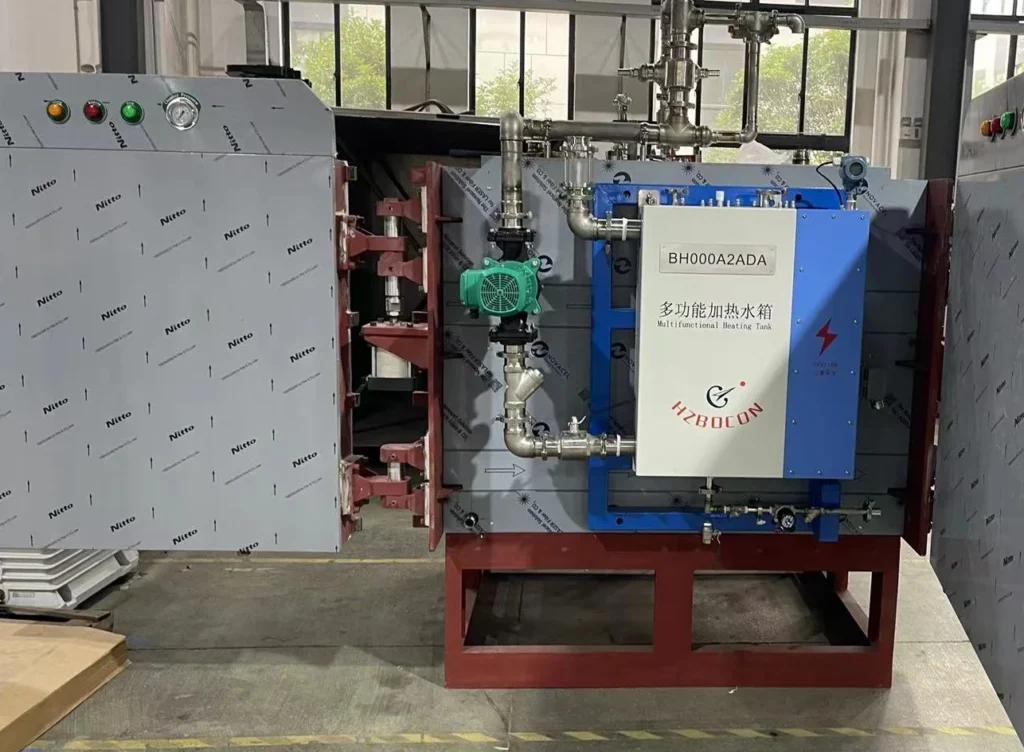
Protection avancée contre les explosions dans l'oxyde d'éthylène (EO) Processus de stérilisation
1. Concept d’explosion et risques dans l’oxyde d’éthylène (EO) Stérilisation
Une explosion se produit lorsque la concentration d'une substance explosive mélangée à de l'oxygène tombe dans ses limites explosives et rencontre une source d'inflammation.. Ce phénomène peut conduire à d'immenses destructions. Dans le contexte de Oxyde d'éthylène (EO) Stérilisation, le “Triangle d'explosion” doit être strictement géré: Matériau combustible, Oxydant, et source d'allumage (Point d'éclair).
2. Normes de conformité pour l'oxyde d'éthylène (EO) Équipement de stérilisation
Tous les équipements électriques antidéflagrants utilisés pour Oxyde d'éthylène (EO) Stérilisation doit respecter strictement les réglementations internationales et nationales:
- FR 3836-2021: Ambiances explosives (Équivalent à la CEI 60079:2017, IDT).
- FR 50058-2014: Code pour la conception des installations électriques dans des environnements à risque d'explosion.
3. Classification des zones dangereuses pour l'oxyde d'éthylène (EO) Stérilisation
Lors de la conception d'un Oxyde d'éthylène (EO) Stérilisation facilité, les emplacements dangereux sont classés en trois zones en fonction de la fréquence et de la durée d'apparition de mélanges gazeux explosifs:
- Zone 0: Présence continue ou apparition prolongée de mélanges gazeux explosifs (par ex., l'espace au-dessus du niveau de liquide à l'intérieur d'un réservoir EO).
- Zone 1: Des mélanges de gaz explosifs sont susceptibles de se produire pendant le fonctionnement normal (par ex., près des soupapes de décharge Oxyde d'éthylène (EO) Stérilisation chambres).
- Zone 2: Il est peu probable que des mélanges de gaz explosifs se produisent en fonctionnement normal, ou s'ils le font, n'existera que pour une courte durée.
4. Interprétation des marquages antidéflagrants
Dans les paramètres techniques de l'équipement utilisé pour Oxyde d'éthylène (EO) Stérilisation, Des marquages Ex spécifiques indiquent la conformité. Ces symboles certifient que le produit est conçu pour fonctionner en toute sécurité dans des environnements à haut risque. Oxyde d'éthylène (EO) Stérilisation zones.
5. Structures antidéflagrantes pour l'oxyde d'éthylène (EO) Environnements de stérilisation
Types de protection pour Oxyde d'éthylène (EO) Stérilisation inclure: Antidéflagrant (d), Sécurité accrue (e), Sécurité intrinsèque (je), Sous pression (p), Immergé dans l'huile (o), Rempli de sable (q), et Encapsulé (m).
5.1 Evolution de l'antidéflagrant (d) Normes
Les dernières normes pour Oxyde d'éthylène (EO) Stérilisation l'équipement classe les structures antidéflagrantes comme:
- et: Convient pour les zones 0 (par ex., capteurs catalytiques dans les détecteurs portables).
- base de données: Le type antidéflagrant standard utilisé dans les Oxyde d'éthylène (EO) Stérilisation configurations.
- cc: Convient aux équipements avec contacts de commutation électriques.
5.2 Sécurité intrinsèque (Ex je) en oxyde d'éthylène (EO) Stérilisation
Sécurité intrinsèque (Ex je) évite une explosion en limitant l’énergie électrique (étincelles et effets thermiques) produit par un instrument. Dans un Oxyde d'éthylène (EO) Stérilisation système de contrôle, ceci est réalisé grâce à des barrières de sécurité.
6. Catégories de matériaux pour l’oxyde d’éthylène (EO) Stérilisation
Les substances explosives sont divisées en classe I (Méthane), Classe II (Gaz/Vapeurs), et classe III (Poussière/Fibres).
Classification EO: Pour GB 3836-2021, L'oxyde d'éthylène est un gaz de classe IIB. Donc, tous les équipements électriques utilisés pour Oxyde d'éthylène (EO) Stérilisation doit être noté comme Classe IIB (ou Classe IIC, qui offre un niveau de protection plus élevé couvrant les exigences IIB).
7. Groupes de températures de surface maximales
La température de surface maximale de tout composant électrique à l'intérieur du Oxyde d'éthylène (EO) Stérilisation l'atmosphère doit toujours rester en dessous de la température d'inflammation du mélange gazeux d'EO pour éviter une combustion accidentelle.
8. Niveaux de protection de l'équipement (LPE) dans les environnements EO
L’EPL définit le niveau d’atténuation des risques pour Oxyde d'éthylène (EO) Stérilisation équipement:
- Géorgie / Maman / Et: “Très élevé” niveau de protection; sûr pendant le fonctionnement normal, défauts attendus, et des défauts rares et rares.
- Go / Mo / Base de données: “Haut” niveau de protection; sûr pendant le fonctionnement normal et les défauts attendus.
- Gc / CC: “Normale” niveau de protection; sécuritaire pendant le fonctionnement normal du Oxyde d'éthylène (EO) Stérilisation processus.
Sécurisez votre oxyde d’éthylène (EO) Conformité de la stérilisation
Assurez-vous que votre Oxyde d'éthylène (EO) Stérilisation l'équipement répond aux dernières normes GB 3836 et normes de sécurité CEI.
Réservez un audit de sécurité de stérilisation EO