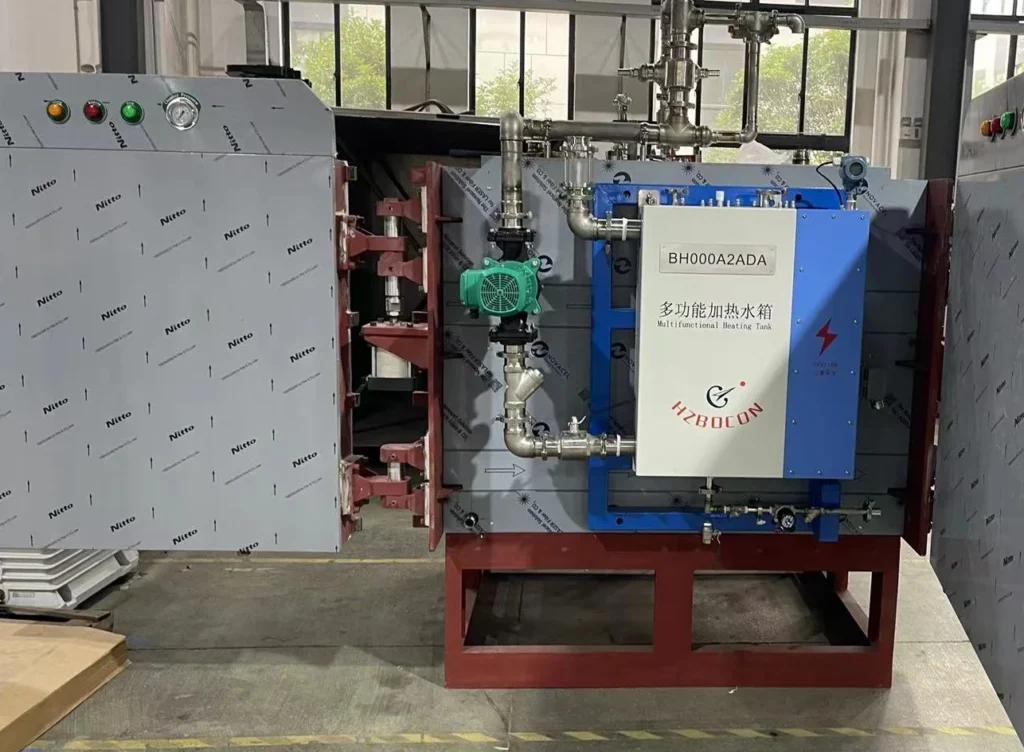
Fortschrittlicher Explosionsschutz bei Ethylenoxid (EO) Sterilisationsprozesse
1. Explosionskonzept und Risiken bei Ethylenoxid (EO) Sterilisation
Eine Explosion tritt auf, wenn die Konzentration eines mit Sauerstoff vermischten explosiven Stoffes innerhalb seiner Explosionsgrenzen liegt und auf eine Zündquelle trifft. Dieses Phänomen kann zu immenser Zerstörung führen. Im Rahmen von Ethylenoxid (EO) Sterilisation, Die “Explosionsdreieck” muss strikt gemanagt werden: Brennbares Material, Oxidationsmittel, und Zündquelle (Flammpunkt).
2. Compliance-Standards für Ethylenoxid (EO) Sterilisationsausrüstung
Alle explosionsgeschützten elektrischen Geräte, die für verwendet werden Ethylenoxid (EO) Sterilisation müssen sich strikt an internationale und nationale Vorschriften halten:
- GB 3836-2021: Explosive Atmosphäre (Entspricht IEC 60079:2017, IDT).
- GB 50058-2014: Code für die Gestaltung elektrischer Anlagen in explosionsgefährdeten Umgebungen.
3. Einstufung des Gefahrenbereichs für Ethylenoxid (EO) Sterilisation
Bei der Gestaltung eines Ethylenoxid (EO) Sterilisation Einrichtung, Gefahrenbereiche werden anhand der Häufigkeit und Dauer des Auftretens explosiver Gasgemische in drei Zonen eingeteilt:
- Zone 0: Ständiges Vorhandensein oder langfristiges Auftreten explosionsfähiger Gasgemische (z.B., der Raum über dem Flüssigkeitsspiegel in einem EO-Tank).
- Zone 1: Im Normalbetrieb ist mit der Entstehung explosionsfähiger Gasgemische zu rechnen (z.B., in der Nähe von Überdruckventilen eingeschaltet Ethylenoxid (EO) Sterilisation Kammern).
- Zone 2: Im Normalbetrieb ist die Entstehung explosionsfähiger Gasgemische unwahrscheinlich, oder wenn sie es tun, wird nur für kurze Zeit bestehen.
4. Interpretation explosionsgeschützter Markierungen
Innerhalb der technischen Parameter der verwendeten Geräte Ethylenoxid (EO) Sterilisation, Spezifische Ex-Kennzeichnungen weisen auf die Einhaltung hin. Diese Symbole bestätigen, dass das Produkt für den sicheren Betrieb unter Hochrisikobedingungen ausgelegt ist Ethylenoxid (EO) Sterilisation Zonen.
5. Explosionsgeschützte Strukturen für Ethylenoxid (EO) Sterilisationsumgebungen
Schutzarten für Ethylenoxid (EO) Sterilisation enthalten: Feuerfest (D), Erhöhte Sicherheit (e), Eigensicherheit (ich), Druck (P), In Öl getaucht (O), Mit Sand gefüllt (Q), Und Gekapselt (M).
5.1 Entwicklung von Flameproof (D) Standards
Die neuesten Standards für Ethylenoxid (EO) Sterilisation Geräte klassifizieren feuerfeste Konstruktionen als:
- Und: Geeignet für Zone 0 (z.B., Katalytische Sensoren in tragbaren Detektoren).
- db: Der standardmäßige druckfeste Typ, der traditionell verwendet wird Ethylenoxid (EO) Sterilisation Setups.
- Gleichstrom: Geeignet für Geräte mit elektrischen Schaltkontakten.
5.2 Eigensicherheit (Ex i) in Ethylenoxid (EO) Sterilisation
Eigensicherheit (Ex i) verhindert eine Explosion durch Begrenzung der elektrischen Energie (Funken und thermische Effekte) von einem Instrument erzeugt. In einem Ethylenoxid (EO) Sterilisation Steuerungssystem, Dies wird durch Sicherheitsbarrieren erreicht.
6. Materialkategorien für Ethylenoxid (EO) Sterilisation
Explosive Stoffe werden in Klasse I eingeteilt (Methan), Klasse II (Gase/Dämpfe), und Klasse III (Staub/Fasern).
EO-Klassifizierung: Für GB 3836-2021, Ethylenoxid ist ein Gas der Klasse IIB. daher, alle elektrischen Geräte, die für verwendet werden Ethylenoxid (EO) Sterilisation muss als bewertet werden Klasse IIB (oder Klasse IIC, Dies bietet ein höheres Schutzniveau und deckt die IIB-Anforderungen ab).
7. Gruppen mit maximaler Oberflächentemperatur
Die maximale Oberflächentemperatur einer elektrischen Komponente innerhalb des Ethylenoxid (EO) Sterilisation Die Atmosphäre muss immer unter der Zündtemperatur des EO-Gasgemisches bleiben, um eine unbeabsichtigte Verbrennung zu verhindern.
8. Geräteschutzstufen (EPL) in EO-Umgebungen
EPL definiert den Grad der Risikominderung für Ethylenoxid (EO) Sterilisation Ausrüstung:
- Ga / Ma / Und: “Sehr hoch” Schutzniveau; sicher im Normalbetrieb, erwartete Fehler, und seltene seltene Fehler.
- GB / Mb / Db: “Hoch” Schutzniveau; sicher im Normalbetrieb und bei erwarteten Störungen.
- Gc / DC: “Normal” Schutzniveau; sicher während des normalen Betriebs des Ethylenoxid (EO) Sterilisation Verfahren.
Sichern Sie Ihr Ethylenoxid (EO) Sterilisationskonformität
Stellen Sie sicher, dass Ihre Ethylenoxid (EO) Sterilisation Ausstattung entspricht dem neuesten GB 3836 und IEC-Sicherheitsstandards.
Buchen Sie ein Sicherheitsaudit für die EO-Sterilisation