
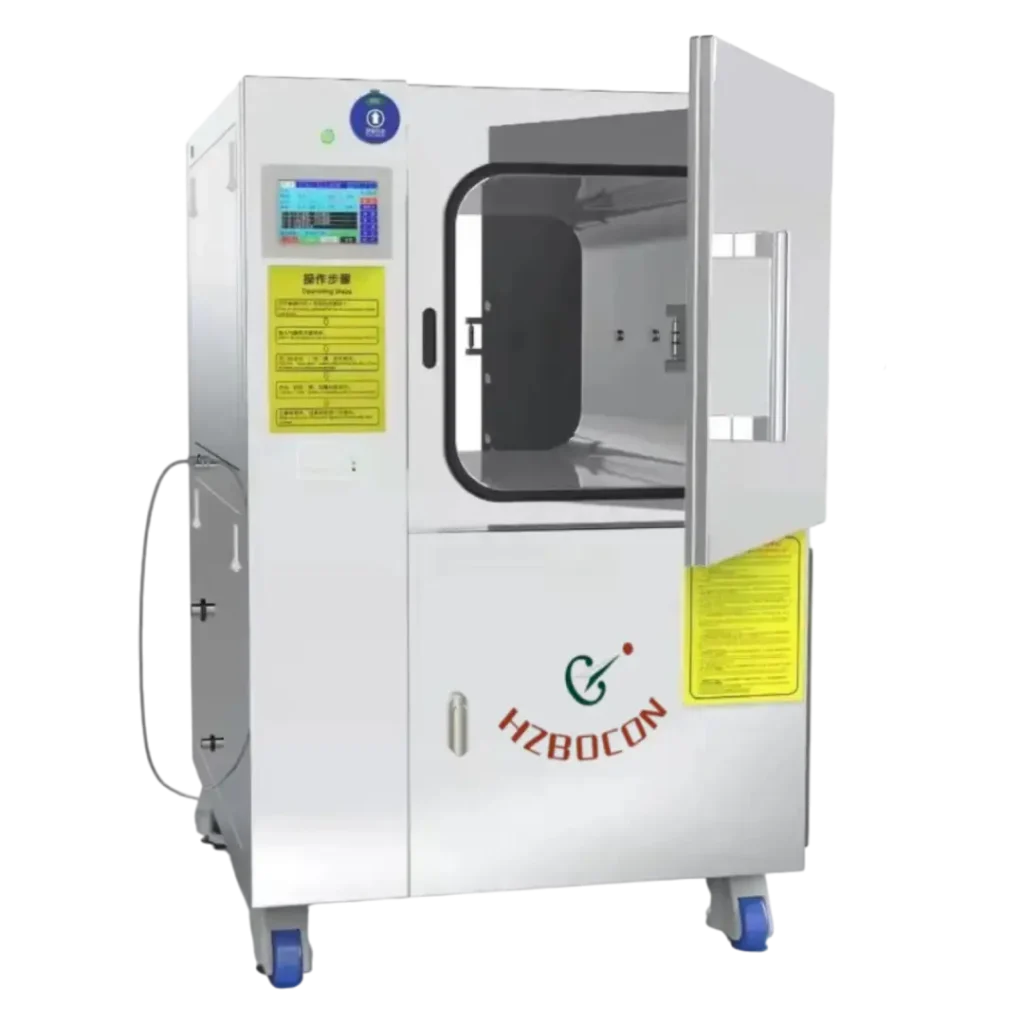
Importance Of Humidity In ETO Sterilization
The success of the Ethylene Oxide (EO/ETO) 消毒 process depends on the precise balance of four critical variables:
- 1. Gas Concentration
- 2. Temperature
- 3. Humidity (RH)
- 4. Exposure Time
Why Humidity is Vital for Sterilization
Humidity plays a decisive role in the lethal action of ETO gas. Without proper moisture levels, microorganisms can become desiccated and resistant to the gas. Here is how humidity levels impact the process:
01. Optimal Penetration (30%RH – 80%RH)
Humidity must be strictly controlled within this range to facilitate the penetration of ETO into biological cells. Moisture rehydrates microbes, making them more vulnerable to the chemical action of the gas.
02. Risks of Low Humidity (< 30%RH)
While sterilization can still occur below 30%RH, the penetration rate is significantly lower. This requires a much longer exposure time to achieve the required sterility assurance level (SAL).
03. Risks of Excessive Humidity (> 80%RH)
High humidity can lead to condensation inside the chamber. Since ETO is highly soluble in water, excessive moisture will absorb the gas, leading to insufficient ETO concentration and prolonged sterilization cycles.
04. Packaging Protection
Excessive humidity can damage product aesthetics, such as causing the ink on cardboard packaging boxes to dissolve. Proper control ensures both sterility and package integrity.
Dual-Sensor Monitoring System
To ensure maximum process reliability, every BOCON ETO Sterilizer is equipped with two independent humidity sensors inside the chamber. This redundancy allows for real-time, high-precision monitoring of the cabinet’s internal Relative Humidity.