How To Calculate Allowable Limits For Khử trùng bằng oxit ethylene
Ensuring patient safety is the highest priority in Khử trùng bằng oxit ethylene. Medical devices must undergo rigorous EtO residual testing to verify they meet the strict limits defined by ISO 10993-7. These compounds—Ethylene Oxide (EO), Etylen clorohydrin (MỖI), and Ethylene Glycol (VÍ DỤ)—can be hazardous to health if not properly managed.
The Calculation of Allowable Limits (AL)
các Allowable Limit (AL) is the maximum acceptable dose of a specific toxin (like EO) a patient can be exposed to. It is calculated based on tolerable intake and biological factors.
$$TE = TI \times BW \times UTF$$
$BW$: Body Weight (kg)
$UTF$: Utilization Factor
Current ISO 10993-7 Allowable Limits
| Exposure Category | Thời lượng liên hệ | EO Limit (mg/d) | ECH Limit (mg/d) |
|---|---|---|---|
| Limited Exposure | First 24 Giờ | 4.0 | 9.0 |
| Tiếp xúc lâu dài | 1 – 30 Ngày | 2.0 | 2.0 |
| Tiếp xúc vĩnh viễn | > 30 Ngày | 0.1 | 0.4 |
Phương pháp phân tích dư lượng EtO
Xác định mức dư lượng, Công nghệ khử trùng Ethylene Oxide dựa vào hai phương pháp trích xuất chính. Một trong hai phương pháp đều đủ để tuân thủ quy định:
Phương pháp này tái tạo tình trạng phơi nhiễm thực tế của bệnh nhân trong quá trình sử dụng sản phẩm thông thường. Nó chỉ trích xuất một phần của dư lượng EtO mà bệnh nhân có thể sẽ tương tác với.
Phương pháp này ước tính tổng số dư lượng EtO trong thiết bị thông qua quá trình chiết lặp đi lặp lại cho đến khi còn lại lượng không đáng kể.
Đảm bảo tuân thủ dòng BOCON BCS
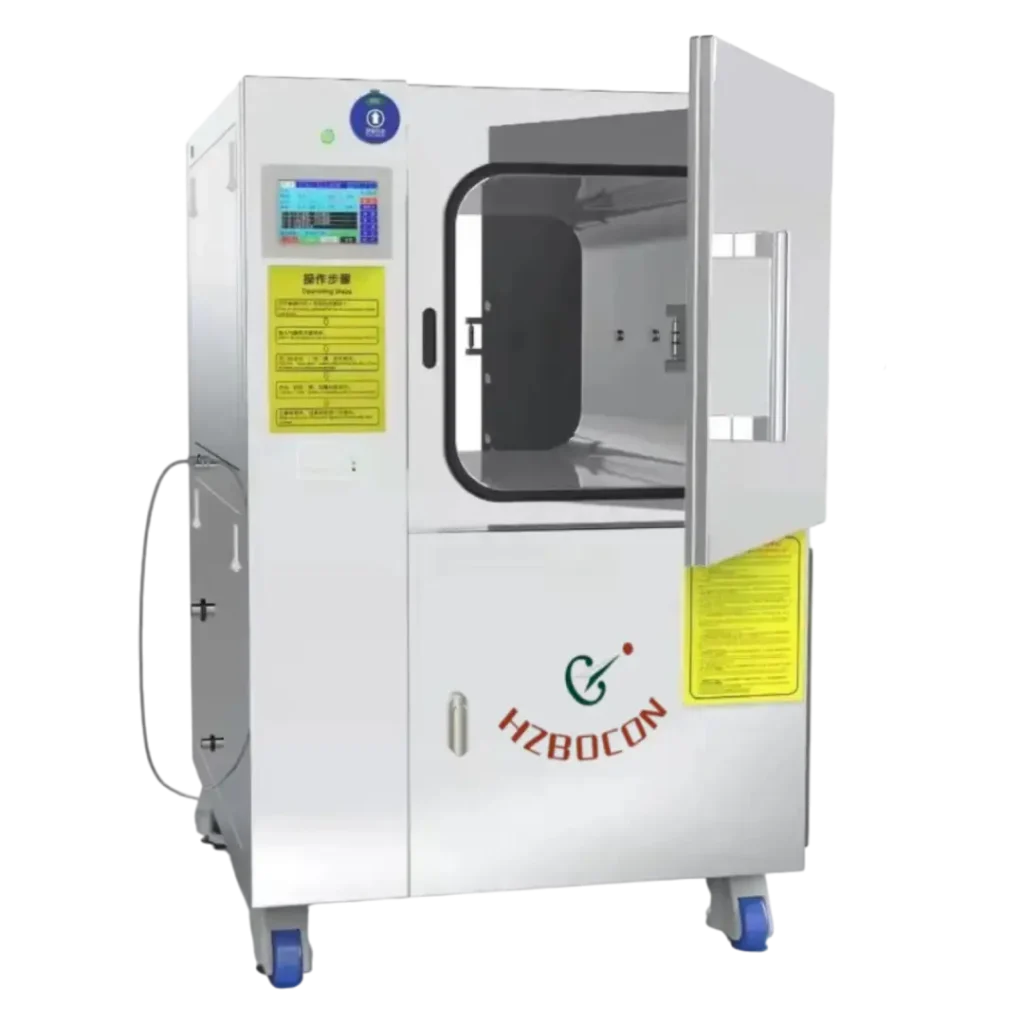
Đạt được những nghiêm ngặt này Giới hạn dư lượng ethylene Oxide đòi hỏi hiệu suất cao chu trình khử trùng. BOCON's Máy tiệt trùng ETO dòng BCS được thiết kế với các quy trình sục khí chân không và sục khí nóng tiên tiến để tăng tốc độ loại bỏ khí. Thiết bị của chúng tôi giúp các nhà sản xuất hợp lý hóa ISO 10993-7 tuân thủ trong khi vẫn duy trì tốc độ quay vòng sản xuất nhanh chóng.
Key figures
| Exposure category | Contact duration | EO limit (mg/day) | ECH limit (mg/day) |
|---|---|---|---|
| Limited | Lên đến 24 giờ | 4.0 | 9.0 |
| kéo dài | 1 ĐẾN 30 ngày | 2.0 | 2.0 |
| Permanent | More than 30 ngày | 0.1 | 0.1 |
Frequently asked questions
What are the ISO 10993-7 limits for limited exposure?
For devices in contact with the patient for up to 24 giờ, the daily limits are 4.0 mg of ethylene oxide and 9.0 mg of ethylene chlorohydrin.
What are the limits for prolonged and permanent contact?
Prolonged exposure (1 ĐẾN 30 ngày) allows 2.0 mg/day of EO and 2.0 mg/day of ECH. Permanent contact (nhiều hơn 30 ngày) allows 0.1 mg/day of each.
Which residues have to be measured?
Three: ethylene oxide (EO), ethylene chlorohydrin (MỖI) and ethylene glycol (VÍ DỤ). EO is the sterilant, ECH forms from the reaction of EO with chloride, and EG is a hydrolysis product.
How is the allowable limit converted into a release criterion?
The daily limit is divided by the amount of device the patient is exposed to – surface area for contact devices, mass for implants – which gives the residue concentration the tested sample must stay below.