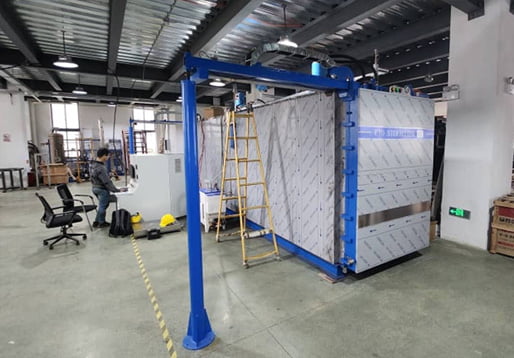
エチレンオキサイド滅菌器のチャンバーリーク気密性試験
適切に密閉された滅菌チャンバーは、サイクル全体にわたって必要なエチレンオキシド濃度と圧力条件を維持するための基本です。. 次の気密性テストは、無菌性の保証やオペレーターの安全を損なう可能性のある許容できない漏れを検出するために、空のチャンバーに対して実行されます。. これらの手順は、次のパフォーマンス検証プロトコルと一致しています。 工業用ETO滅菌器.
重要な原則: リークテストにより、負圧と正圧の両方の条件下での滅菌チャンバーの完全性を検証します, 動作中に外部汚染物質が侵入したり、滅菌ガスが漏れたりしないようにする.
一般的なテスト要件
すべてのリークテストは空の滅菌チャンバーで実施する必要があります. 自動テストサイクルの完了後, チャンバー圧力が周囲大気圧の±5 kPa 以内に戻るまで、濾過された空気が導入されます。. 非自動テスト方法の場合, 測定を続行する前に、同じ圧力均一化を達成するために同等の準備を行う必要があります.
必要に応じて, 圧力監視を開始する前に、300 秒 ±10 秒の安定化期間を設定できます。. この間, チャンバーに接続されているすべてのバルブが閉じられ、真空ポンプが作動します。 (使用されている場合) 停止されています. The subsequent observation period is 12 時間, long enough for a genuine leak to separate from thermal drift.
負圧リークテスト
負圧リークテストは、チャンバーの真空保持能力を評価します。, これは滅菌サイクルの排気段階で重要です. The test pressure is -90 kPa: deep enough to exceed any production cycle. これにより、チャンバーは、使用中に経験する可能性のある最も要求の厳しい真空条件下でテストされることが保証されます。.
手順: 空のチャンバーを指定された負のテスト圧力まで排気します。. チャンバーに接続されているすべてのバルブを閉じ、真空ポンプを完全に停止します。. After the 15-minute balance, monitor and record the pressure continuously for 12 時間. The average vacuum leakage rate must not exceed 0.3 kPa/h once the temperature effect of about 0.34 kPa per °C is deducted. 制限を超えて増加した場合は、チャンバーの完全性が侵害されている可能性があることを示しており、滅菌器を使用する前に調査して修正する必要があります。.
正圧リークテスト
The positive test is specified separately from the vacuum test: the chamber is empty and sealed, brought to a steady 30-50 °C (above ambient), pressurised to +80 kPa, balanced for 15 minutes and then held for 12 時間. The average leakage rate must not exceed 0.3 kPa/h after deducting the temperature effect of roughly 0.34 kPa per °C.
正圧リークテストは、チャンバーが漏れなく高圧を封じ込める能力を検証します。. テスト圧力は、滅菌サイクルの最高設定圧力を下回ってはなりません。, 最悪の場合の正圧条件下でチャンバーが評価されるようにする.
加熱チャンバーに関する特別な考慮事項: 加熱されたチャンバー内でテストが実行される場合, 温度変化は圧力測定値に影響を与え、計算されたリーク率に影響を与える可能性があります。. したがって, 試験圧力に達した後, 温度が安定するまで安定化期間を守る必要があります, プラス追加 120 秒, 監視フェーズが始まる前に. これにより、熱の影響による圧力変化が補償されます。.
すべてのバルブが閉じられ、圧力源が遮断された状態, record the pressure for 12 時間. The average leakage rate over that period must not exceed 0.3 kPa/h once the temperature effect is deducted. 一貫した監視により、たとえ軽微な漏れであっても確実に検出され、迅速に対処されます。.
ETO 滅菌器が最高の完全性基準を満たしていることを確認してください
チャンバーのリークテストに関する専門家のサポートについては、HZBOCON にお問い合わせください。, 工場出荷時の受け入れプロトコル, および包括的な検証サービス.
WhatsApp でチャットしてくださいKey figures
| Parameter | Requirement | 注記 |
|---|---|---|
| Stabilisation period | 15 分 | Chamber held at a steady 30-50 °C, above ambient |
| Observation window | 12 時間 | Pressure recorded continuously, then averaged over the hold |
| Negative test pressure | -90 kPa | Temperature-corrected (about 0.34 kPa per °C) |
| Pressure restoration | Filtered air until within ±5 kPa of ambient | Before the chamber is opened |
| Positive pressure test | When working pressure exceeds 5 kPa: +80 kPa, 15 min balance, 12 h hold, average rate ≤0.3 kPa/h | Temperature-corrected (about 0.34 kPa per °C); confirms the chamber contains pressure without leaking outward |
| Acceptance | Average vacuum leakage rate ≤0.3 kPa/h | Measured after deducting the temperature effect |
Frequently asked questions
What vacuum level is used for the negative pressure leak test?
The chamber is evacuated to -90 kPa, balanced for 15 minutes and held for 12 時間. That is deeper than any production cycle, so the test proves the chamber at its real working limit rather than at an arbitrary figure, そして 0.3 kPa/h limit is applied after the temperature correction.
How long must the pressure be monitored?
12 hours of continuous recording, after a 15-minute balance at a steady 30-50 °C. Shorter windows cannot separate a genuine leak from normal pressure drift on a large chamber.
When is a positive pressure test required?
When the sterilizer operating pressure is greater than 5 kPa. The positive test complements the vacuum test: one proves the chamber holds vacuum, the other proves it holds pressure without leaking sterilant.
What counts as a pass?
The average leakage rate over the 12-hour hold must stay at or below 0.3 kPa/h, measured after the temperature effect of about 0.34 kPa per °C is deducted from the observed pressure change.
How is the chamber prepared before the test?
The chamber is empty and dry. After the test cycle, filtered air is introduced until pressure returns to within ±5 kPa of ambient atmospheric pressure, so the chamber is never opened under vacuum or with residual EO.