How To Calculate Allowable Limits For Ethylene Oxide Sterilization
Ensuring patient safety is the highest priority in Ethylene Oxide sterilization. Medical devices must undergo rigorous EtO residual testing to verify they meet the strict limits defined by ISO 10993-7. These compounds—Ethylene Oxide (EO), Ethylene Chlorohydrin (ECH), and Ethylene Glycol (EG)—can be hazardous to health if not properly managed.
The Calculation of Allowable Limits (AL)
The Allowable Limit (AL) is the maximum acceptable dose of a specific toxin (like EO) a patient can be exposed to. It is calculated based on tolerable intake and biological factors.
$$TE = TI \times BW \times UTF$$
$BW$: Body Weight (kg)
$UTF$: Utilization Factor
Current ISO 10993-7 Allowable Limits
| Exposure Category | Contact Duration | EO Limit (mg/d) | ECH Limit (mg/d) |
|---|---|---|---|
| Limited Exposure | First 24 Hours | 4.0 | 9.0 |
| Prolonged Exposure | 1 – 30 Days | 2.0 | 2.0 |
| Permanent Exposure | > 30 Days | 0.1 | 0.4 |
Methods of EtO Residual Analysis
To determine the residue levels, Ethylene Oxide sterilization technology relies on two primary extraction methods. Either method is sufficient for regulatory compliance:
This method replicates the actual patient exposure during normal product use. It extracts only the fraction of EtO residuals that the patient would likely interact with.
This method estimates the total majority of EtO residuals within the device through repeated extractions until negligible amounts remain.
Ensure Compliance with BOCON BCS Series
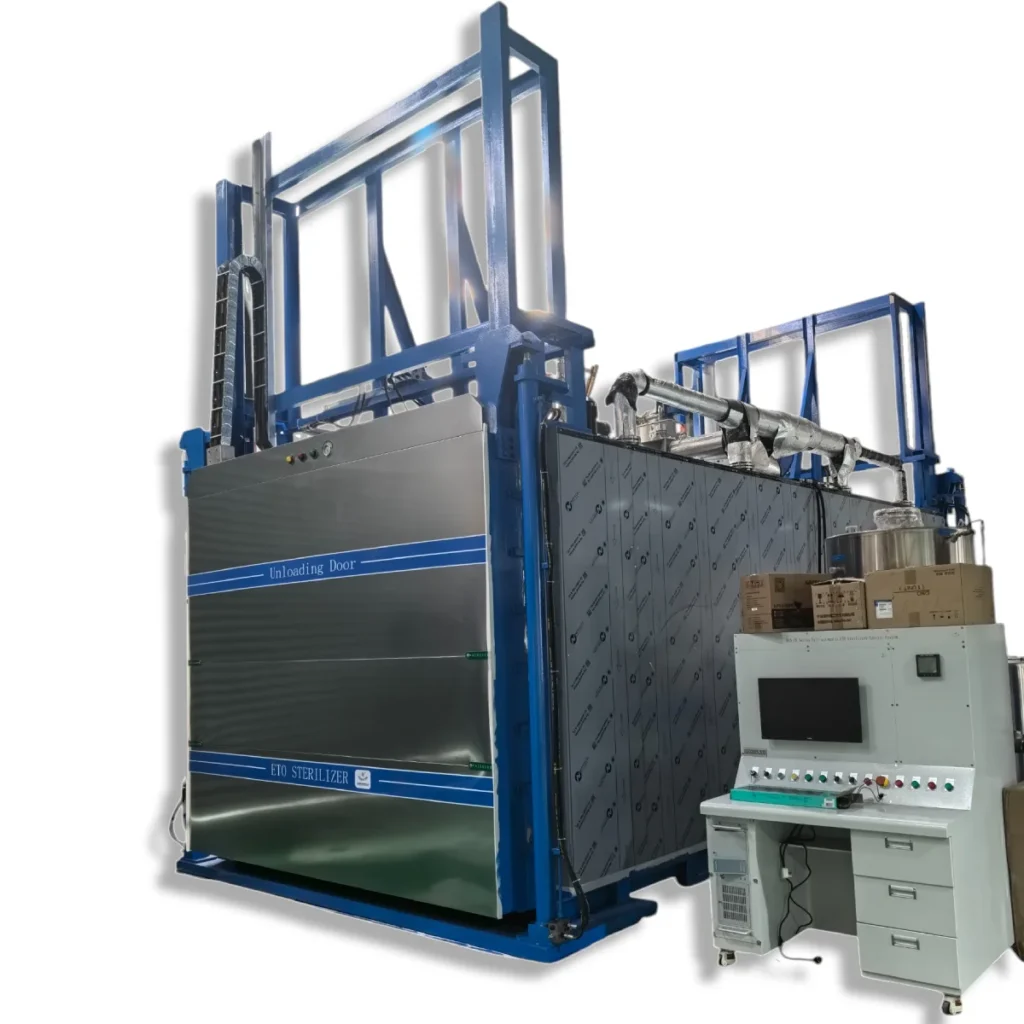
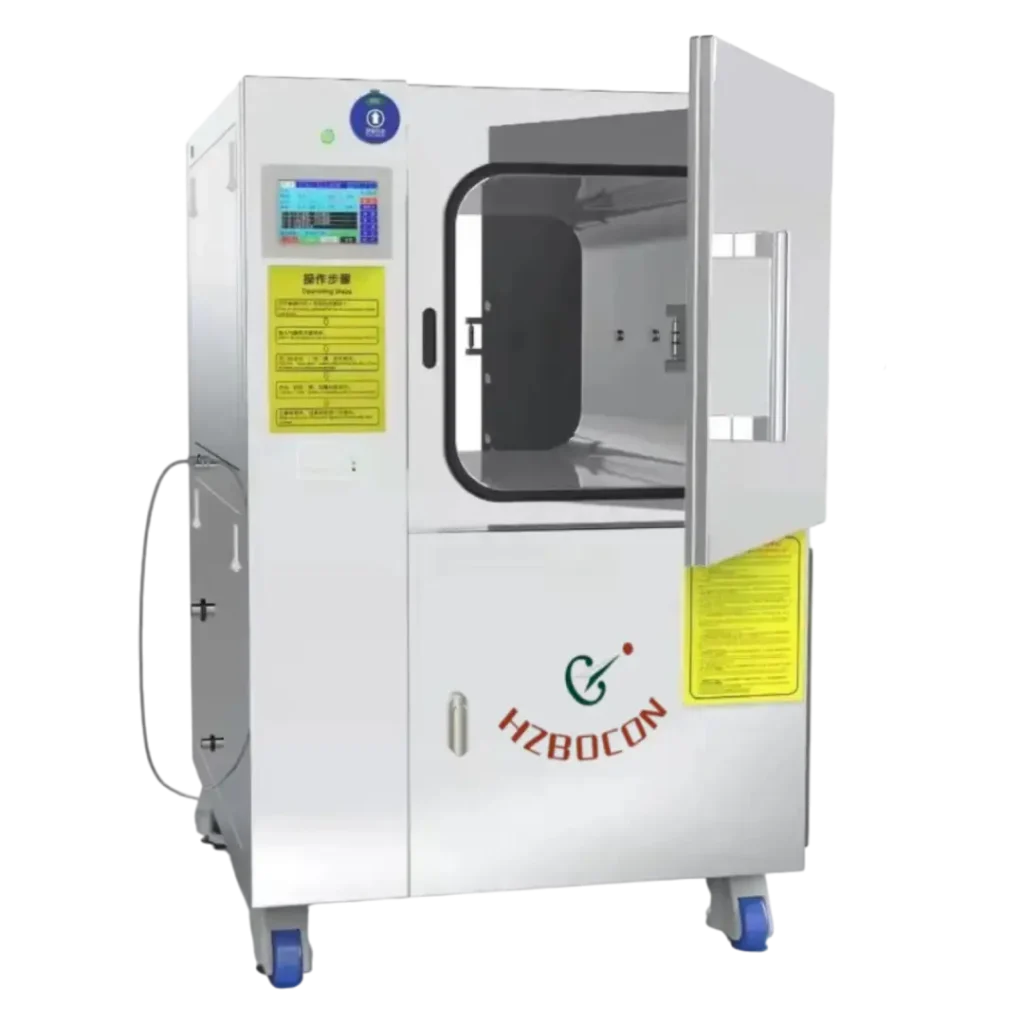
Achieving these strict Ethylene Oxide residual limits requires a high-performance sterilization cycle. BOCON’s BCS Series ETO Sterilizers are engineered with advanced vacuum and heated aeration protocols to accelerate gas removal. Our equipment helps manufacturers streamline ISO 10993-7 compliance while maintaining rapid production turnarounds.
Key figures
| Exposure category | Contact duration | EO limit (mg/day) | ECH limit (mg/day) |
|---|---|---|---|
| Limited | Up to 24 hours | 4.0 | 9.0 |
| Prolonged | 1 to 30 days | 2.0 | 2.0 |
| Permanent | More than 30 days | 0.1 | 0.1 |
Frequently asked questions
What are the ISO 10993-7 limits for limited exposure?
For devices in contact with the patient for up to 24 hours, the daily limits are 4.0 mg of ethylene oxide and 9.0 mg of ethylene chlorohydrin.
What are the limits for prolonged and permanent contact?
Prolonged exposure (1 to 30 days) allows 2.0 mg/day of EO and 2.0 mg/day of ECH. Permanent contact (more than 30 days) allows 0.1 mg/day of each.
Which residues have to be measured?
Three: ethylene oxide (EO), ethylene chlorohydrin (ECH) and ethylene glycol (EG). EO is the sterilant, ECH forms from the reaction of EO with chloride, and EG is a hydrolysis product.
How is the allowable limit converted into a release criterion?
The daily limit is divided by the amount of device the patient is exposed to – surface area for contact devices, mass for implants – which gives the residue concentration the tested sample must stay below.