Guia de compatibilidade de materiais para óxido de etileno (EO) Esterilização
Um gráfico técnico abrangente analisando polímeros, elastômero, e resistência metálica a circuitos de esterilização química por gás.
1. O papel do óxido de etileno (EO) Esterilização na Engenharia Moderna
Óxido de Etileno (EO) Esterilização é uma metodologia de esterilização química amplamente reconhecida e de baixa temperatura, adaptada especificamente para componentes sensíveis ao calor e à umidade. É excepcionalmente popular na fabricação de dispositivos médicos, laboratórios de pesquisa biológica, e aplicações microfluídicas porque alcança a erradicação microbiana total sem submeter instrumentos delicados a altas temperaturas operacionais.
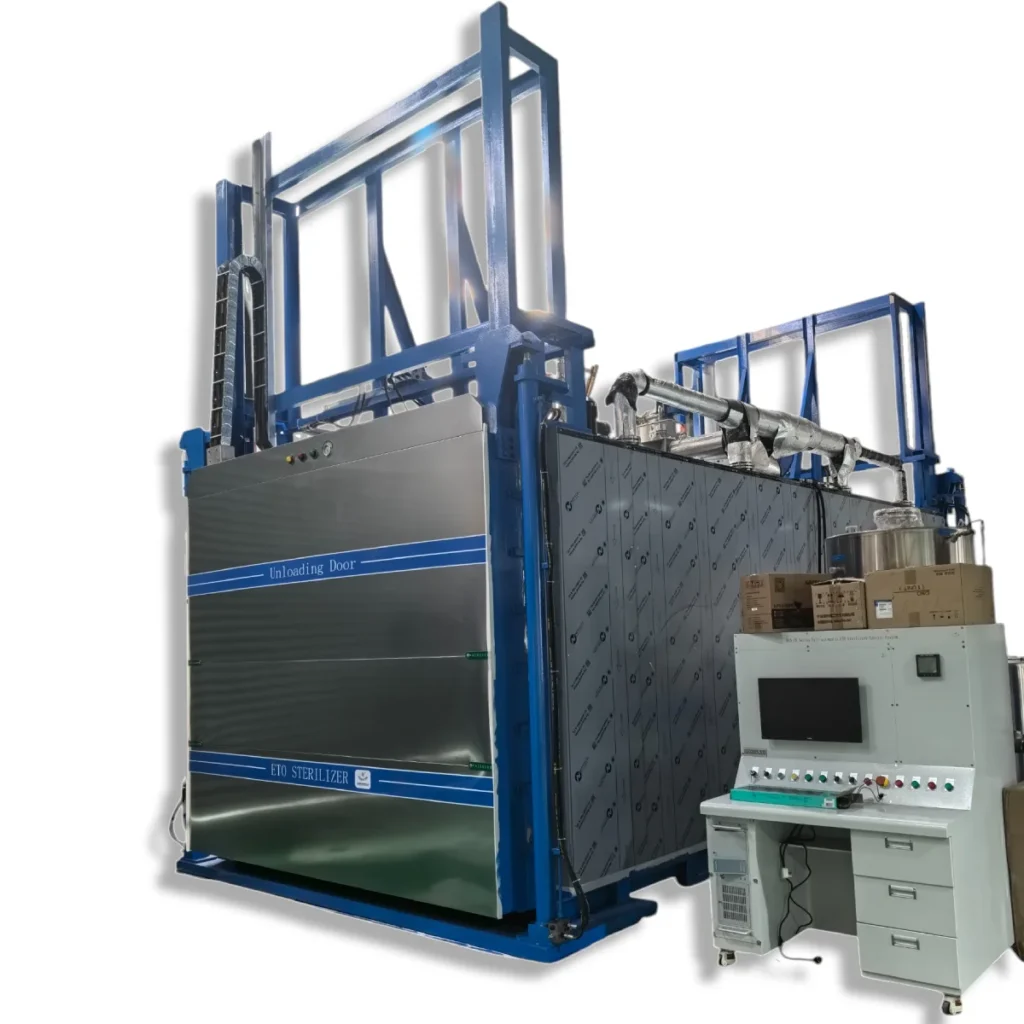
O padrão Óxido de Etileno (EO) Esterilização O fluxo de trabalho envolve a exposição de componentes do substrato a concentrações controladas de óxido de etileno gasoso dentro de uma câmara industrial selada a vácuo. Este gás altamente penetrante se infiltra em lacunas geométricas complexas, interrompendo efetivamente a cadeia de DNA microbiana através da alquilação para garantir a esterilidade absoluta. Sua natureza não térmica faz dele a principal opção para esterilizar termoplásticos personalizados, biopolímeros, e chipsets eletrônicos integrados que poderiam facilmente deformar sob autoclavagem a vapor convencional ou processos de alta temperatura.
No entanto, apesar da eficácia incomparável Óxido de Etileno (EO) Esterilização, uma aeração pós-esterilização dedicada (desgaseificação) ciclo permanece totalmente obrigatório. Devido à toxicidade química inerente e à inflamabilidade do gás EO, moléculas residuais devem ser extraídas sistematicamente da matriz do material para garantir a segurança final do usuário e do paciente.
2. Polímero Abrangente & Matriz de Compatibilidade de Metal
Para ajudar engenheiros biomédicos, pesquisadores de laboratório, e desenvolvedores de produtos na avaliação de como materiais específicos se comportam quando submetidos a Óxido de Etileno (EO) Esterilização ciclos, o seguinte índice de rastreamento abrangente foi compilado. Sintetizado a partir de pontos de dados confiáveis do setor, incluindo critérios de validação da Qosina, Índice, e Industrial Specialties Mfg. - este gráfico descreve perfis precisos de compatibilidade química.
Utilize esta tabela de referência abrangente para tomar decisões materiais altamente informadas, garantir a durabilidade dos componentes a longo prazo, e manter experimentos de laboratório livres de contaminação.
- Bom Pouco ou nenhum efeito. A integridade estrutural do material é totalmente mantida.
- Justo Efeito leve a moderado. Pequenas mudanças físicas podem ocorrer ao longo de vários ciclos.
- Pobre Efeito moderado a grave. Não recomendado para exposição padrão a gases.
| Classificação de Materiais | Óxido de Etileno (EO) Compatibilidade de esterilização |
|---|---|
| Polietileno de ultra-alto peso molecular (UHMWPE) | Bom |
| Poliuretano Termoplástico (TPU) | Bom |
| Poliolefina Termoplástica (TPO) | Bom |
| Aço inoxidável 316 | Bom |
| Silicone | Bom |
| Fluoreto de polivinila (PVF) | Bom |
| Cloreto de Polivinila (Não plastificado – PVC) | Bom |
| Cloreto de Polivinila (PVC) | Bom |
| Poliuretano (PU) | Bom |
| Politetrafluoretileno (PTFE) | Bom |
| Polissulfona (fonte de alimentação) | Bom |
| Poliestireno (PS) | Bom |
| Polipropileno (PP) | Bom |
| Polifenilsulfona (PPSU) | Bom |
| Sulfeto de Polifenileno (PPS) | Bom |
| Polioximetileno (Delrin) | Bom |
| Polimetilmetacrilato (PMMA) | Bom |
| Polietileno (Educação Física) | Bom |
| Polieteretercetona (ESPIAR) | Bom |
| Polidimetil Siloxano (PDMS) | Bom |
| Policlorotrifluoroetileno (PCTFE) | Bom |
| Policarbonato (PC) | Bom |
| Elastômero termoplástico de poliamida (TPA) | Bom |
| Poliamida (Nylon) | Bom |
| Perfluoroelastômero (FFKM) | Bom |
| Perfluoro Alcóxi (PFA) | Bom |
| Elastômero Termoplástico Olefínico (TPO) | Bom |
| Neoprene | Pobre |
| Polietileno de Baixa Densidade (PEBD) | Bom |
| Polietileno Linear de Baixa Densidade (PEBDL) | Bom |
| Policarbonato de alto calor (PC) | Bom |
| Polipropileno de alta densidade (HDPP) | N / D |
| Polietileno de alta densidade (PEAD) | Bom |
| Etileno Propileno Fluorado (FEP) | Bom |
| Etileno Tetrafluoroetileno (Tefzel – ETFE) | Bom |
| Monômero de etileno propileno dieno (EPDM) | Bom |
| Etileno Clorotrifluoroetileno (ECTFE) | Bom |
| Polímero Cicloolefínico (POLICIAL) | Bom |
| Copolímero Cicloolefina (COC) | Bom |
| Alumínio | Pobre |
Otimize seus parâmetros industriais de esterilização por EO
Garanta que suas instalações de produção de alta capacidade atendam às normas ISO internacionais 11135 regras de validação. Fale hoje mesmo com nossos engenheiros de aplicação.
Obtenha soluções personalizadas de esterilização por EO