
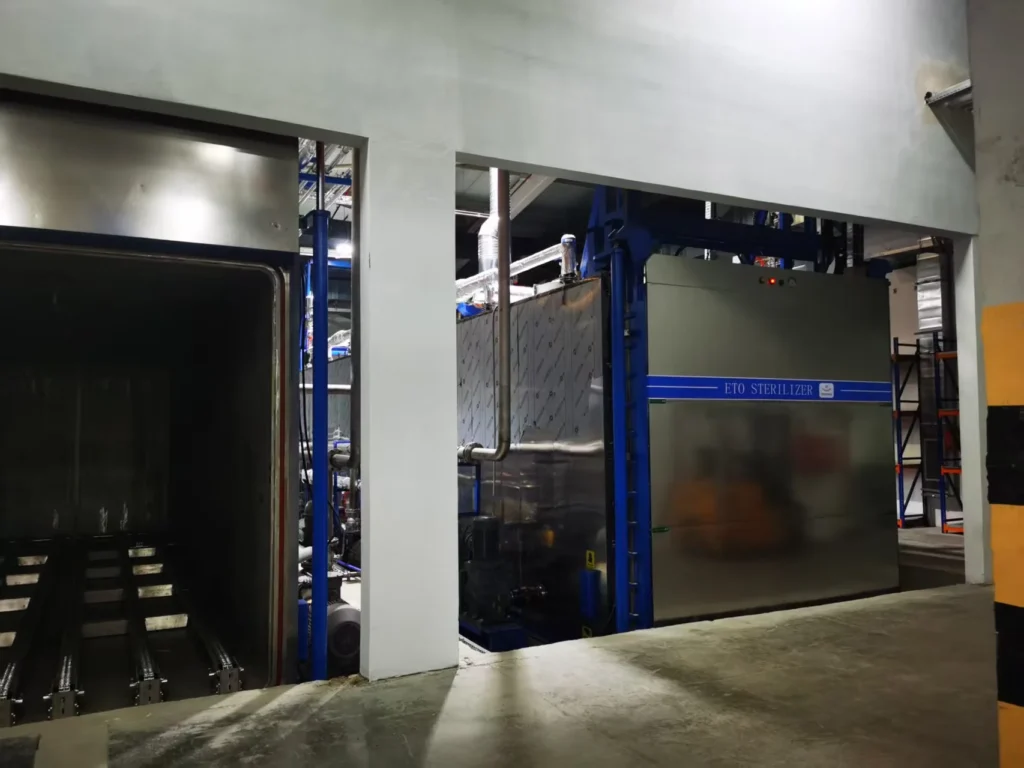
Ethylene Oxide Sterilization for Medical Devices
In the medical industry, terminal sterilization is the final safeguard—the process of deactivating all microbial life after a product is sealed in its final packaging. Ethylene Oxide (EO) gas stands as the premier chemical agent for this task, especially for complex devices that cannot withstand the high temperatures of steam or the degradation of radiation.
EO is a potent, highly penetrating alkylating agent. It works by disrupting the reproductive DNA of microorganisms. In modern industrial settings, it is used either as 100% pure EO or in a safer EO/CO₂ mixture to ensure maximum lethality within a vacuum environment.
Application: What Can Be Sterilized?
While moist heat is a cost-effective alternative for simple tools, EO is the mandatory choice for:
- Heat-Labile Equipment: Sensitive electronics and fine optics.
- Polymer Materials: Plastic devices, IV sets, and specialized catheters.
- Gowning Materials: Surgical drapes, gowns, and porous non-woven fabrics.
- Powders: Anhydrous materials that must remain dry.
The Standard EO Sterilization Cycle
Lethality Factors: The Science of SAL 10⁻⁶
The success of a sterilization cycle depends on the precise calibration of four critical variables:
| Factor | Standard Range | Impact on Process |
|---|---|---|
| Gas Concentration | 400 – 1200 mg/L | Higher concentrations increase microbial kill-rate but require longer aeration. |
| Temperature | 50°C – 60°C (122°F – 140°F) | Optimizes gas activity while protecting heat-sensitive polymers. |
| Relative Humidity | 35% – 80% RH | Essential for rehydrating spores to make them vulnerable to EO gas. |
| Exposure Time | Variable (Avg. 6 hours) | Adjusted based on load density and material absorbency. |
Precision Control with BOCON Systems
At BOCON, we understand that Ethylene Oxide sterilization is a powerful yet delicate solution. Our BCS Series ETO Sterilizers are engineered to manage these variables with computerized precision, ensuring that the aeration and off-gassing periods are optimized to minimize residuals while maximizing throughput and safety.