Significato di Rilevamento dei residui di ossido di etilene
Ossido di etilene (EO/EtO) è un potente agente alchilante utilizzato per ottenere la totale sterilità nei dispositivi medici. Tuttavia, la sua elevata tossicità e la potenziale cancerogenicità richiedono precisazioni Rilevazione dei residui di OE. Per i produttori, verificare che i livelli residui soddisfino le soglie di sicurezza non è solo un ostacolo normativo: è un mandato fondamentale per la sicurezza del paziente.
Prodotti regolamentati che richiedono test EO
Tutti i prodotti medici monouso sterilizzati tramite gas OE devono essere sottoposti ad analisi gascromatografica nello spazio di testa. I prodotti chiave includono:
Conformità agli standard
Le apparecchiature e i protocolli di convalida BOCON sono in linea con gli standard di esecuzione più rigorosi del settore:
- GB/T 14233.1: Metodi di analisi chimica per apparecchiature di infusione e iniezione.
- GB/T 16886.7 (ISO 10993-7): Valutazione biologica dei dispositivi medici – Residui di sterilizzazione con ossido di etilene.
Metodologia tecnica: Gascromatografia (GC)
IL Gascromatografo è l'apparecchio standard per la misurazione Residui di EtO. Utilizzando l'acqua come estraente, il contenuto di EO viene determinato attraverso l'equilibrio gas-liquido ad alta precisione.
Utilizzando Gascromatografia nello spazio di testa, L'EO viene estratto dal campione. Una volta che la soluzione standard raggiunge l'equilibrio, la concentrazione del gas viene misurata registrando l'altezza o l'area del picco sul cromatogramma.
Metodo di pesatura: 50mL di acqua vengono iniettati con circa 6 mL di gas EO. Il peso esatto viene determinato con una precisione di $ 0,100 g $ e diluito a $1 \volte 10^{-2}g/L$ per creare il master soluzione madre standard.
Ottimizzazione dei cicli per ridurre gli errori di rilevamento
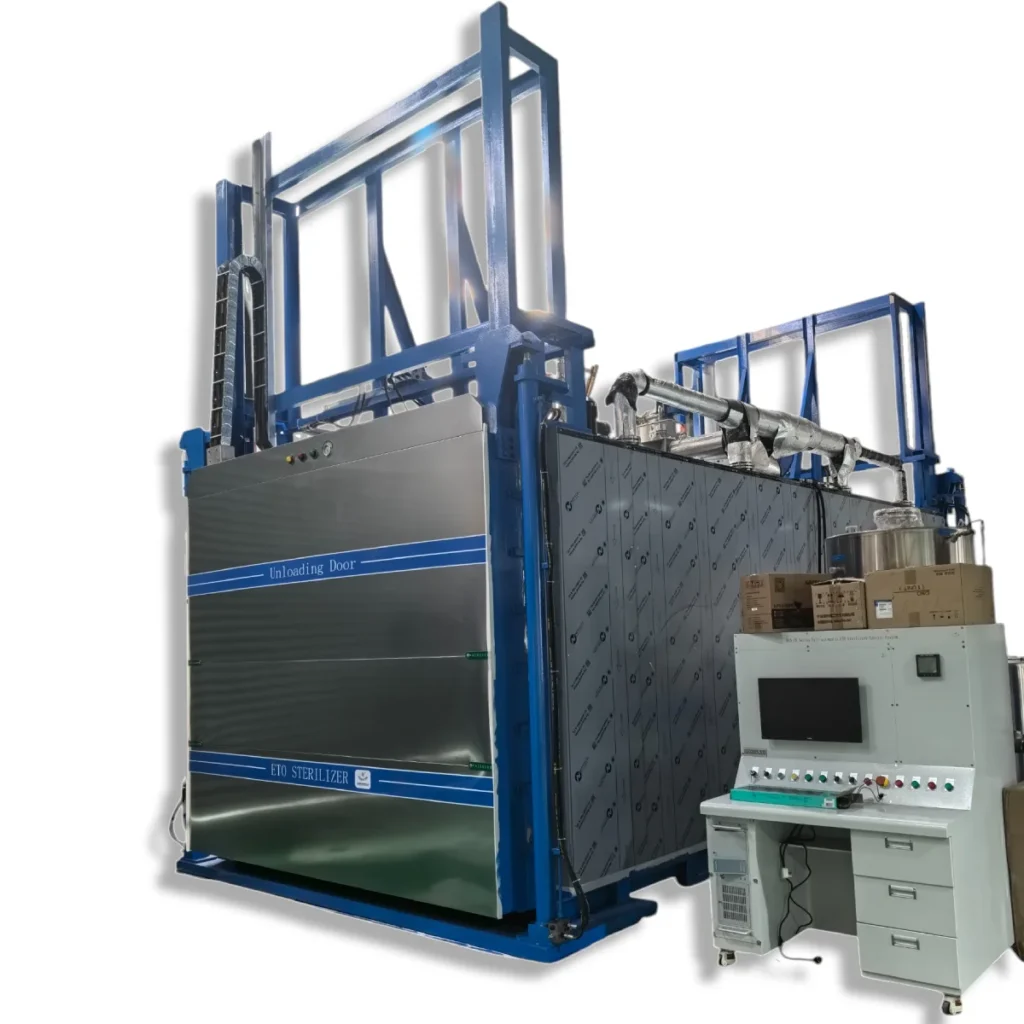
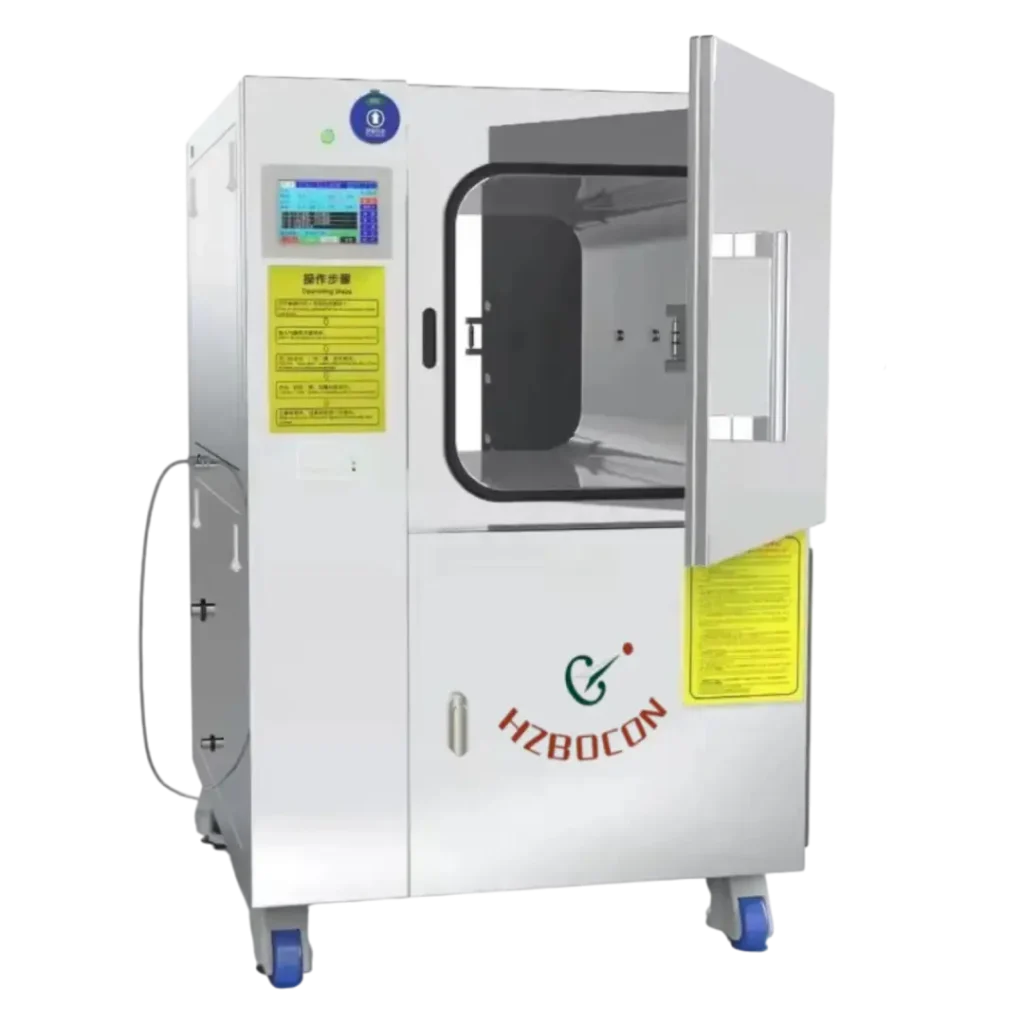
Mentre il rilevamento è obbligatorio, prevenire residui elevati alla fonte è più efficiente. BOCON Sterilizzatori ETO serie BCS presentano fasi ottimizzate di spurgo sotto vuoto e aerazione riscaldata. Riducendo Residui di ossido di etilene durante il ciclo di sterilizzazione stesso, aiutiamo i produttori a passare Test GC in modo più coerente e accelerare il rilascio del prodotto sul mercato.