Miért használjon etilén-oxidot? (EO) for Medical Device Sterilization?
Etilén-oxid (EO) has become the industry standard for alacsony hőmérsékletű sterilizálás. Its primary advantage lies in its exceptional material compatibility—it can effectively sterilize plastics, polimerek, metals, and glass without the structural degradation caused by high-heat steam or radiation.
EO works through a chemical reaction called alkilezés. It disrupts the DNA of bacteria, viruses, and molds, rendering them unable to reproduce. Unlike other methods, EO penetrates deep into complex geometries like long lumens and multi-layered packaging.
A 4 Critical Factors of Cycle Design
Designing a successful EO sterilizációs ciklus requires a delicate balance of four adjustable parameters:
Érvényesítés & Megfelelőségi szabványok
Before moving to production, manufacturers must conduct “worst-case” stability studies to ensure the cycle doesn’t adversely affect coatings, bonds, or functionality. Formal validation must align with:
- ISO 11135:2014: Sterilization of health care products — Ethylene oxide.
- ISO 10993-7:2008: Orvostechnikai eszközök biológiai értékelése – rész 7: Etilén-oxid sterilizálási maradékok.
Precision Control with BOCON BCS Series
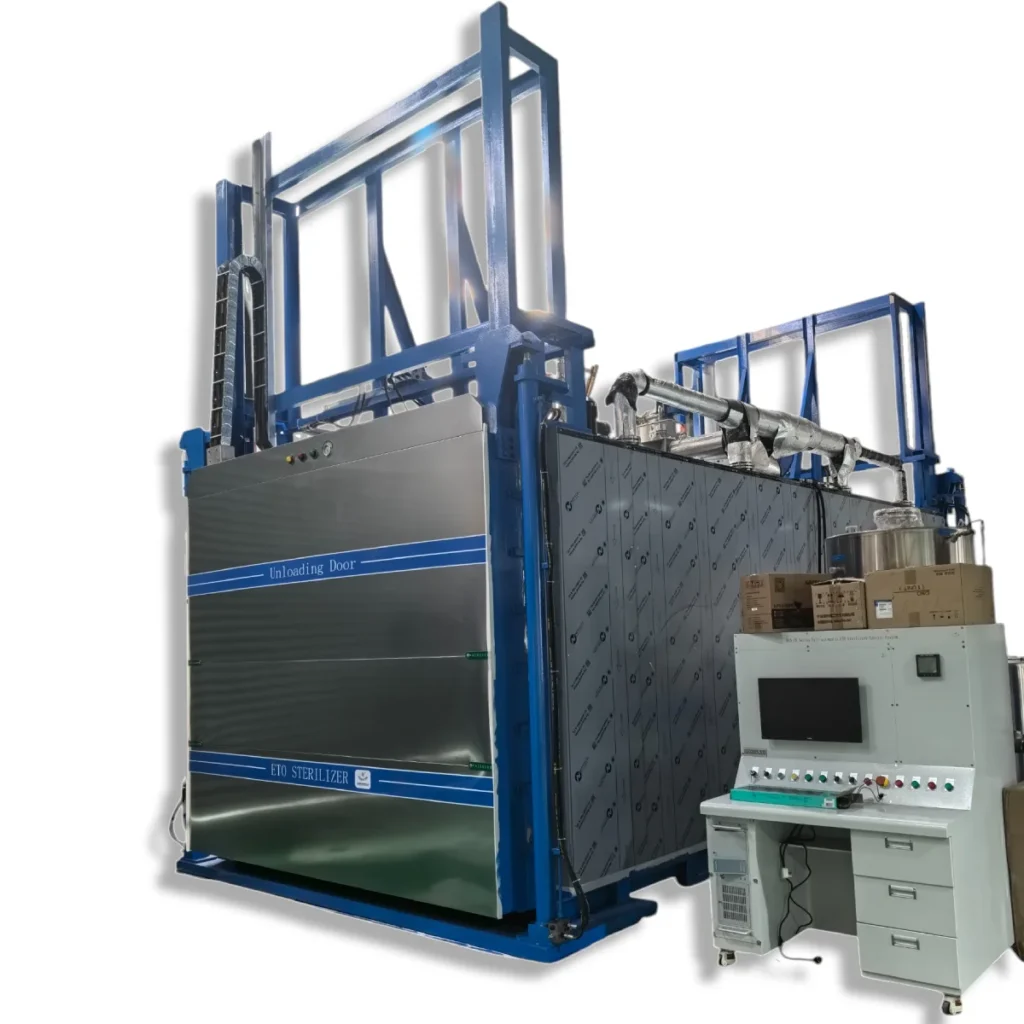
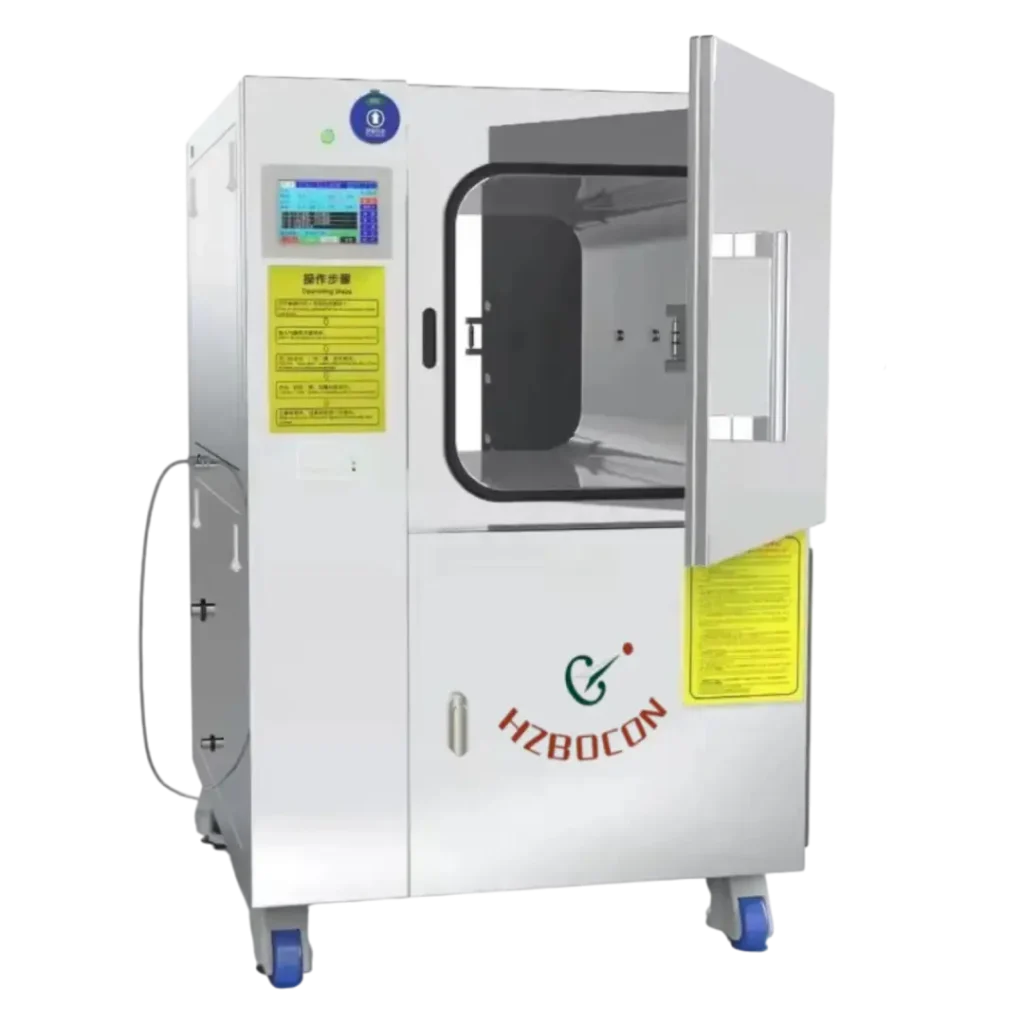
The flexibility of Etilén-oxid sterilizálási technológia is its greatest strength, but it requires equipment capable of exact parameter control. BOCON BCS sorozatú ETO sterilizátorok offer industry-leading precision in vacuum depth and humidity regulation. Whether you are sterilizing sensitive electronics or complex catheters, our systems ensure you meet SAL 10⁻⁶ while protecting your high-value materials.